

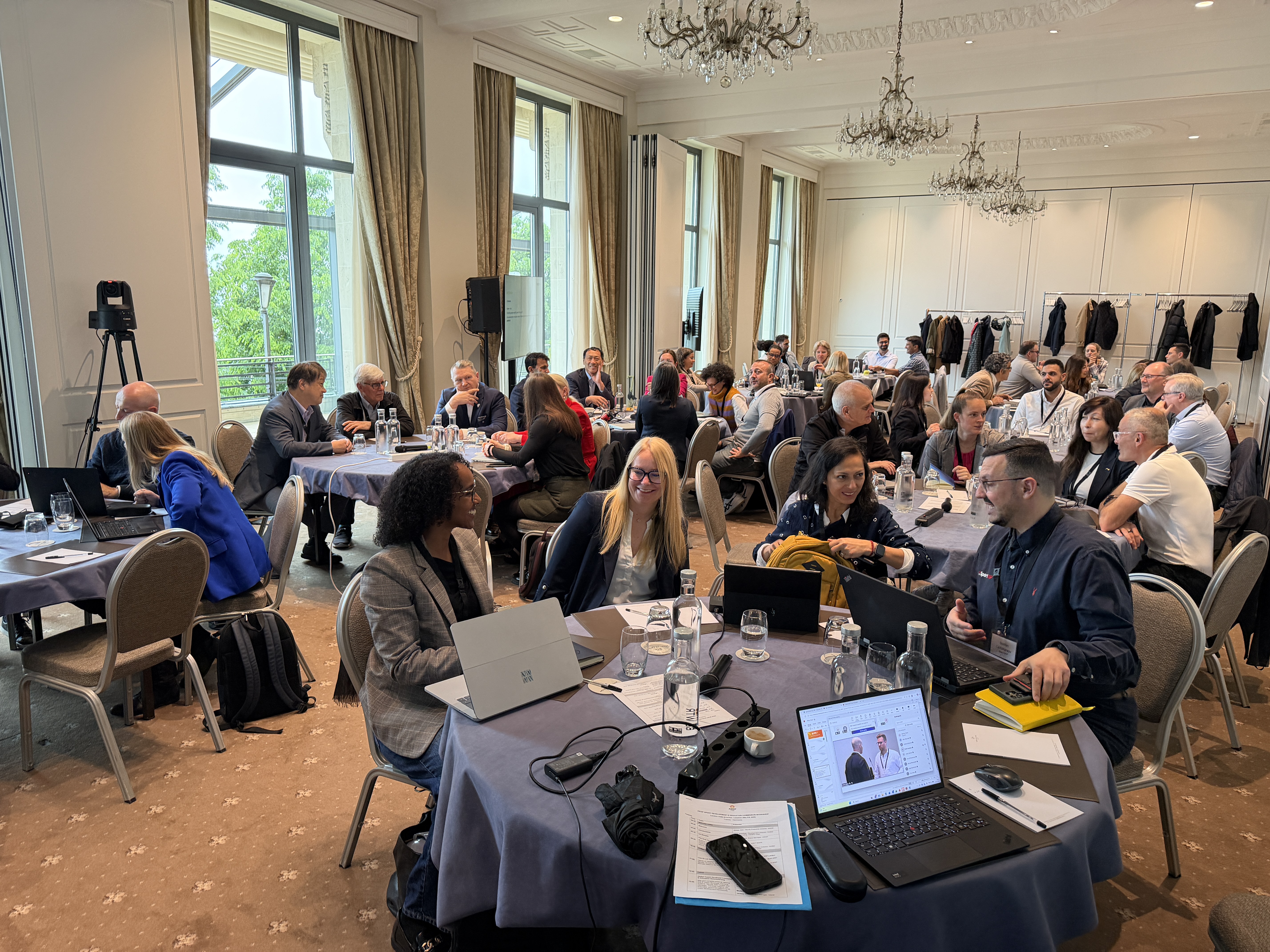
Collaboration, innovation and open exchange was at the heart of a two-day workshop, organised by the ASOIF Sport Development and Education Commission (ASDEC) on 5 and 6 May in Lausanne, Switzerland. The meeting brought together more than 60 participants from 30 International Federations (IFs) for two days of peer exchange and practical discussion on key issues shaping the future of sport development.
Held in a collaborative and informal setting, the workshop focused on topics including coach development, officiating, National Federation support, and the evolving delivery of sport development programmes.
AI, emerging markets and the future of event delivery
The workshop opened with a keynote presentation from Mounir Zok, CEO of N3XT Sports, who addressed emerging markets, the modernisation of event delivery, and the growing importance of AI maturity within IFs.
Participants then took part in an interactive AI Lab session hosted by Sport ERP, where they explored AI tools and workflows through a dedicated “playground” platform designed to encourage hands-on experimentation and discussion.
Coach development in focus
Coach developer education emerged as one of the workshop’s central themes. John Bales former President of the International Council for Coaching Excellence (ICCE), presented updates on new coach developer pathways, while Masa Ito, Director of the NSSU Coach Developer Academy, shared a case study on the evolution of the Tokyo coach developer programme.
Participants also discussed the possibility of ASOIF conducting cross-sport research to map coach developer courses offered by IFs around the world, with the aim of improving understanding and sharing of best practices across sports.
Sharing successful initiatives across IFs
The workshop programme also featured updates from the Badminton World Federation (BWF) and World Rugby on the Community Coach Pilot Study Programme, alongside four IF case studies highlighting successful sport development initiatives and practical lessons learned.
Addressing challenges for match officials and referees
Day two focused on the challenges facing match officials and referees, including recruitment, retention, and engaging younger generations in officiating roles, with the participating IFs exchanging about best practises, costs and benchmarks for certification programmes.
Discussions also explored the increasing pressure created by rising event delivery costs, particularly the challenge of maintaining accessibility and participation opportunities for smaller or less-resourced National Federations.
A trusted space for open discussion
The workshop concluded with roundtable discussions hosted by Olympic Solidarity, giving participants an opportunity to exchange feedback, ideas and perspectives on existing programmes and future collaboration opportunities.
Participant feedback strongly highlighted the value of the workshop as a trusted environment for open discussion, practical learning and networking across International Federations. Many participants - particularly first-time attendees, but also experienced delegates who had attended numerous workshops - emphasised the importance of having a collaborative and non-political space in which to share challenges, ideas and experiences openly.
ASDEC Chair Deqa Niamkey, Development Director at United World Wrestling, highlighted after the workshop:
“The ASDEC Workshop 2026 was a great success, offering International Federations a wide range of relevant topics, including updates on the current trends and landscape of sports business industry, participation programmes, and strategies for entering new markets.”
“The workshop also fostered meaningful discussions with key partners focused on the development and growth of our sports. It continues to serve as an important platform for networking, exchanging ideas, sharing best practices, and transferring knowledge, all in line with ASOIF’s broader good governance strategy.”
She added: “I would like to express my sincere gratitude to ASOIF and its team for their outstanding efforts in organising initiatives that help advance our sports, as well as to the ASDEC Commission members for their commitment and valuable contributions.”
The workshop concept is fully aligned with the third strategic pillar of the ASOIF Strategy 2026–2032, which focuses, among other priorities, on developing and modernising platforms for shared learning and adding value by addressing member priorities and sector developments.